Replace one missing tooth, beautifully

A single dental implant is the closest thing to having your natural tooth back. It looks like one, feels like one and works like one - without touching the healthy teeth either side.

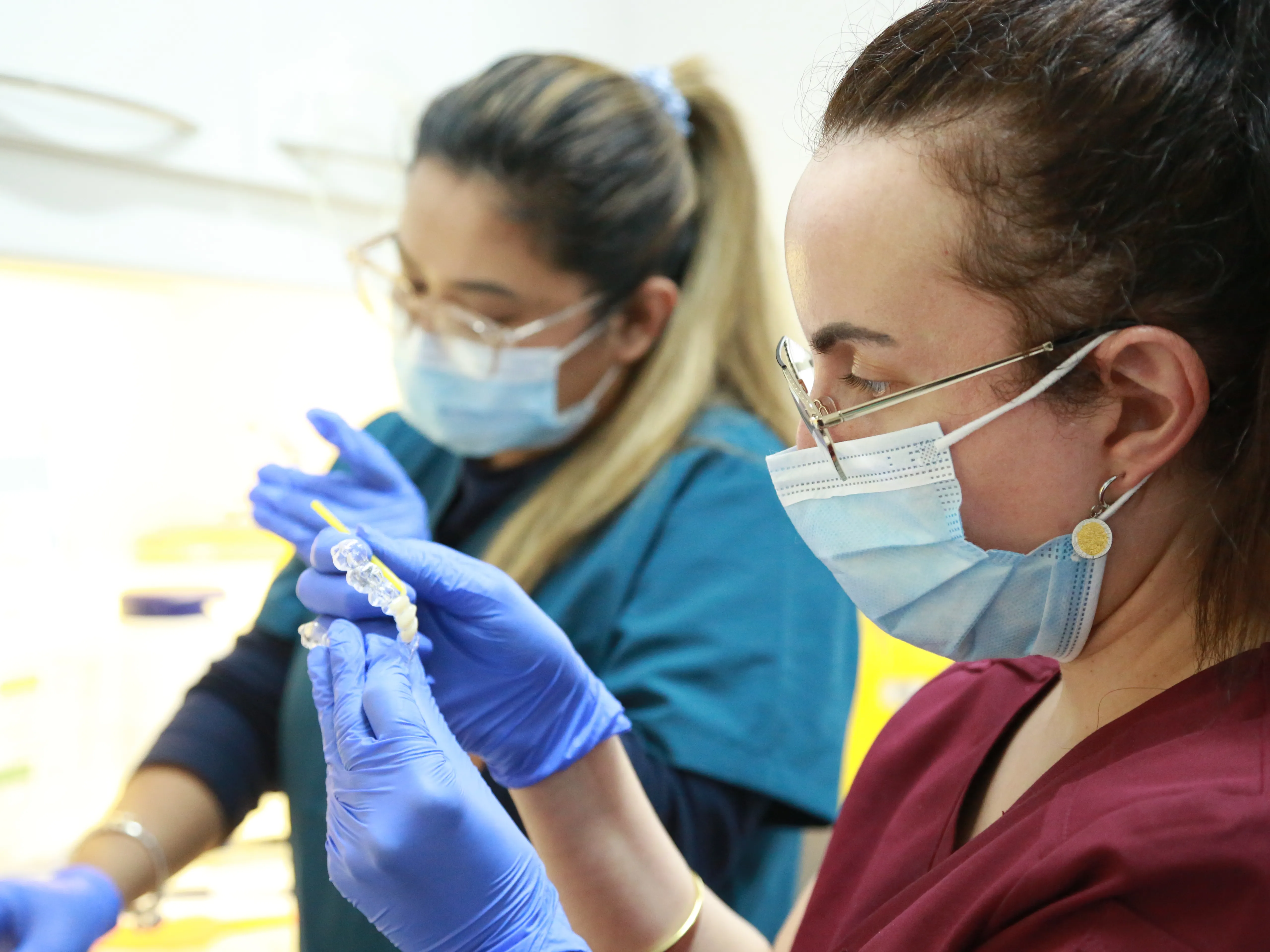
What is a single tooth dental implant?
A single tooth dental implant replaces both the root and the crown of a missing tooth. It's made up of three carefully designed parts: a small titanium implant that sits in your jawbone (acting as the new tooth root), an abutment that connects it to the visible part, and a custom-crafted crown made to match your natural teeth in colour, shape and character. The result is genuinely indistinguishable from the rest of your smile.

Why one missing tooth matters more than you'd think
People often live with a missing tooth for years before doing anything about it - especially if it's not visible when smiling. The trouble is, the consequences quietly add up. The teeth either side gradually tilt into the space. The tooth opposite starts to drift downward (or upward). Your bite slowly changes. The bone beneath the missing tooth shrinks. Patients tell us that what felt manageable at first has, over time, started to affect how they chew, how they smile and how they feel.
Caring for Richmond families for over 30 years
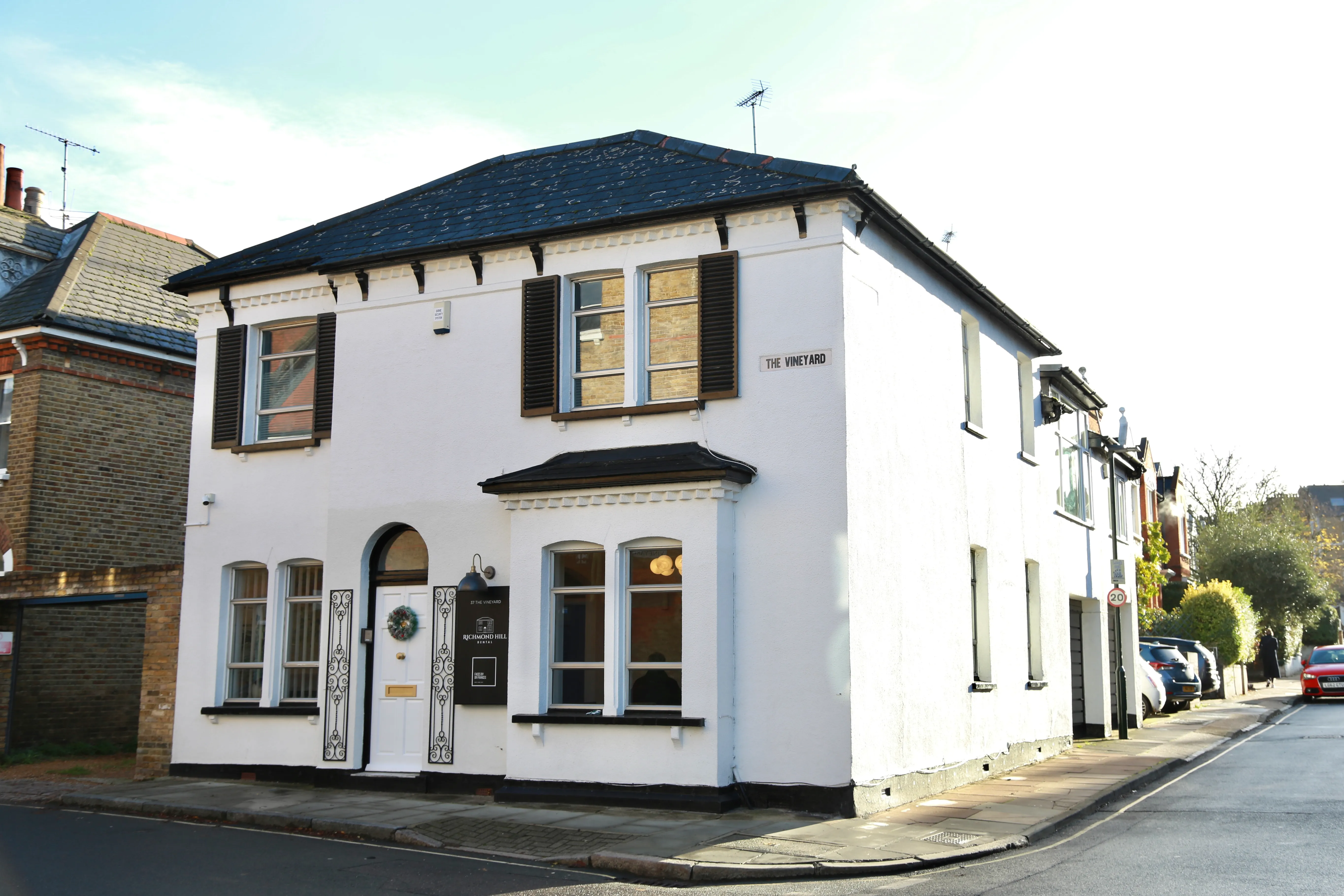
We've been carrying out single tooth implant treatment at our Vineyard practice for many years, with a quietly excellent reputation across Richmond, Kew, East Sheen and TW10. Many of our long-term patients still have implants placed 15 to 20 years ago going strong. That kind of longevity comes from doing things properly - careful planning, established Dentsply Sirona implant systems, and never cutting corners.

Your two main options at Richmond Hill Dental
When replacing several missing teeth, there are usually two sensible approaches. We'll always recommend the one that genuinely suits your case.
- Individual implants - one implant per missing tooth, each with its own crown. Maximum support and independence between teeth, ideal when the gaps aren't side by side
- Implant-supported bridge - fewer implants supporting multiple teeth across a bridge. More cost-effective for several adjacent missing teeth, while still being fixed, stable and natural-looking
The three parts of a dental implant
It's worth understanding what you're actually getting. A complete single tooth implant treatment includes:
- The implant itself - a small, beautifully engineered titanium post that's placed gently into your jawbone, replacing the natural tooth root
- The abutment - a small connector that sits on top of the implant and supports the visible crown
- The crown - a custom-made ceramic tooth, designed digitally and matched carefully to your natural teeth
Each part is precision-made for your specific mouth, so the finished result blends seamlessly with the teeth around it.

When a single implant is the right choice
A single tooth implant tends to suit patients who:
- Have lost one tooth through decay, trauma, gum disease or extraction
- Want a fixed, long-term solution rather than a bridge or denture
- Don't want their healthy neighbouring teeth touched or reshaped
- Have enough jawbone to support the implant (or are open to bone grafting)
- Are in reasonably good general health
A consultation and 3D CBCT scan will confirm whether you're a suitable candidate, and we'll always be honest if a different approach would suit you better.
The benefits of choosing an implant over the alternatives
Compared to bridges and dentures, single tooth implants offer real long-term advantages:
- Doesn't affect your healthy neighbouring teeth at all
- Looks completely natural - most patients can't tell which tooth is the implant
- Functions like a natural tooth, including for harder foods
- Helps preserve the bone beneath where your tooth used to be
- Easier to clean than a bridge
- Long-lasting, often decades with proper care
- Doesn't need replacing every 10 to 15 years like a bridge
Modern dentistry in Richmond powered by 3D scanning
Every single tooth implant case at Richmond Hill Dental begins with detailed digital planning. Our in-house 3D CBCT scanner shows your jawbone, nerves and surrounding anatomy in remarkable three-dimensional detail. Combined with digital iTero impressions, this lets us plan the exact position, angle and depth of your implant - long before any surgery begins.
Your single tooth implant journey at Richmond Hill Dental
Single tooth implant treatment is a properly considered process. Here's exactly what to expect.
Step 1 - Your implant consultation
You'll meet our implant team for a dedicated consultation (£95). We'll examine the area, discuss your goals, and explain whether a single implant is the right path for you.
Step 2 - 3D CBCT scan and digital planning
A detailed 3D scan shows us exactly what your jawbone looks like. We'll plan the precise position of your implant virtually, and you'll receive a fully costed written treatment plan to take home and consider.
Step 3 - Implant placement
On surgery day, the implant is gently placed into your jawbone under local anaesthetic. The procedure usually takes 30 to 60 minutes and is quicker (and calmer) than most patients expect. IV sedation is available if you'd prefer.
Step 4 - Healing and integration
Over the following 6 to 16 weeks, your implant bonds firmly with your jawbone through a remarkable natural process called osseointegration. You'll often have a temporary tooth in place during this time, so there's no visible gap.
Step 5 - Your final custom crown
Once your implant is fully integrated, your final crown is digitally designed and carefully matched to your natural teeth. We'll fit it precisely, check every detail of bite and appearance, and make sure you're properly happy before you leave.
Single implant vs dental bridge - the honest comparison
Both are well-established ways to replace a single missing tooth, but they go about it differently:
- Single implant - sits independently in your jawbone, doesn't affect neighbouring teeth, lasts longest
- Dental bridge - anchors to the healthy teeth on either side, which usually need reshaping. Lower upfront cost but tends to need replacing every 10 to 15 years
- The long-term picture - implants typically work out better value over a lifetime, since bridges often need replacing more than once. When a bridge fails, you can also end up with a bigger gap than you started with
Most patients who are suitable for an implant do choose one for these reasons - but we'll always discuss both options honestly.

How long does single implant treatment take?
For most cases, the full journey from consultation to final crown takes three to six months. Patients who need bone grafting beforehand may take a little longer. We'll always give you a clear, realistic timeline at your consultation.

Sedation for nervous patients in Twickenham and Richmond
If you're feeling anxious about implant treatment, please know you're far from alone. IV sedation with Dr Frances Carling-Thom can help you feel deeply relaxed throughout, with most patients remembering very little of the appointment afterwards.

How much does a single tooth implant cost in Richmond?
We're a fully private practice with transparent, upfront pricing:
- Implant consultation - £95
- 3D CBCT diagnostic scan - £125
- Dental implant - from £1,500
- Abutment and crown - from £1,500
- IV sedation - from £500
- Bone graft (if needed) - from £1,200
A single tooth implant with crown typically starts from around £3,000. Final pricing depends on your specific case, and you'll always receive a fully written treatment plan before agreeing to anything. See our full implant costs page for the complete breakdown.
Frequently asked questions
Is single tooth implant treatment uncomfortable?
The area is fully numbed throughout, so you won't feel sharpness or pain at the time. Most patients tell us it felt easier than a complex extraction. Mild tenderness in the days afterwards is normal and usually settles within a few days with standard pain relief.
How long does a single implant last?
With good home care and regular hygiene visits, a dental implant can last for decades - often the rest of your life. The crown on top may need refurbishing after 15 to 20 years, but the implant itself is built to be permanent.
Will the crown look natural?
Beautifully so. Each crown is digitally designed and carefully matched to your surrounding teeth - colour, shape, texture, character. Most patients can't tell which tooth is the implant, even up close.
Am I suitable for a single tooth implant?
Most adults are suitable. The main factors we'll assess at your consultation include your gum health, the amount and quality of jawbone, your medical history, and any habits like smoking. A 3D CBCT scan will give us a clear picture before recommending anything.
Will I have a visible gap during treatment?
For most patients, no. We can usually provide a temporary tooth during the healing phase, so you're never left with a visible gap. We'll discuss what's possible for your specific case at your consultation.
What if I've lost the bone where the tooth used to be?
If there's been significant bone shrinkage (often the case if a tooth has been missing for a while), bone grafting can usually restore enough bone to place the implant safely. Our 3D CBCT scan will show exactly what's possible.
How do I look after my dental implant?
The same way you look after natural teeth - careful brushing twice daily, interdental cleaning around the implant, and regular hygiene visits every three to six months. For more detail, see our dental implant recovery page.
What happens if my implant doesn't heal properly?
Implant failure is uncommon when treatment is carefully planned, but if it does happen we'll talk you through your options openly. In most cases, the area can be allowed to heal and a new implant placed once the site is suitable again.