Rebuilding the foundation for your dental implant

When there isn't quite enough bone to place a dental implant safely, bone grafting helps us create a strong, stable base for long-term success. It's a quietly clever bit of modern dentistry.


What is bone grafting?
Bone grafting (sometimes called bone augmentation or guided bone regeneration) is a careful procedure that adds new bone material to areas of your jaw where it's needed. It's used when your existing bone isn't quite strong enough, deep enough or wide enough to support a dental implant on its own.

Why your jawbone matters for dental implants
Implants work because of a remarkable natural process called osseointegration, where your jawbone fuses directly to the titanium implant. For that to happen reliably, the bone needs enough volume and density to hold the implant firmly. Without it, the implant simply won't stay put.
Why bone can shrink in the first place
After a tooth is lost or extracted, the bone that used to support it slowly shrinks away - sometimes by quite a lot, especially if a tooth has been missing for years. Other reasons your bone might be reduced include:
- Long-term gum disease, which damages bone over time
- Trauma or injury to the area
- Extractions where the socket wasn't preserved
- Natural age-related bone loss in some patients
The longer a gap has been there, the more likely bone grafting becomes part of the picture.
Do I need bone grafting in Richmond?
The honest answer is - we won't know until we look properly. Many implant patients don't need bone grafting at all, and we'd never recommend it unnecessarily. Our assessment involves:
- A clinical examination of the implant site
- A detailed 3D CBCT scan, which shows your bone in three dimensions
- A review of your medical history and any factors affecting healing
- Careful discussion of all your options before any decision
If grafting isn't needed, we'll happily proceed without it. If it is, we'll explain exactly why and what's involved.

Modern dentistry in Richmond powered by 3D scanning
Our in-house 3D CBCT scanner is what makes bone grafting decisions so much more accurate than they used to be. A traditional 2D X-ray only shows you so much. A 3D scan lets us see the precise width, height and density of your bone before any treatment is planned - meaning fewer surprises and more predictable results.
The types of bone grafting we offer at Richmond Hill Dental
Not all bone grafts are the same. We offer the full range of approaches in-house, so we can choose the simplest one that genuinely works for your case.
- Socket preservation - bone material placed at the time of extraction to maintain bone for a future implant
- Minor (simultaneous) grafting - small areas of bone topped up at the same time as implant placement, with minimal extra recovery
- Staged bone grafting - for more significant bone loss, bone is rebuilt first and the implant placed after healing
- Ridge augmentation - widening or heightening the ridge of bone where an implant will be placed
- Guided bone regeneration (GBR) - using a protective membrane to guide new bone formation in a controlled way
- Sinus augmentation - a related technique for bone in the upper back jaw, where the sinus needs to be carefully lifted
Your bone grafting journey at Richmond Hill Dental
Bone grafting is a properly considered process, and we'll guide you through each step.

Step 1 - Your implant consultation
You'll meet our implant team for a dedicated consultation (£95). We'll examine the area, discuss your goals, and explain whether bone work is likely to be needed.
Step 2 - 3D CBCT scan and detailed planning
A 3D scan shows us exactly what your bone looks like. We'll then plan whether grafting is needed, what kind, and whether it can be done at the same time as implant placement or as a separate stage.
Step 3 - The grafting procedure
The procedure is carried out under local anaesthetic, with IV sedation available if you'd prefer. For minor grafting, the whole thing is often done at the same time as your implant placement. For larger cases, it's done first.
Step 4 - Healing and bone integration
Over the following weeks and months, your body slowly converts the graft material into your own new bone. This stage can take three to nine months depending on the size of the graft and your individual healing.
Step 5 - Implant placement (if staged)
Once the new bone has matured properly, your implant can be placed into a strong, stable foundation. From here, your treatment follows the standard dental implant journey.
A minimally invasive approach where possible
Our quiet philosophy is to use the simplest, kindest technique that delivers a properly reliable result. We won't recommend grafting if it can safely be avoided. Equally, we won't skip grafting if it's genuinely needed for long-term implant success - because cutting corners on the foundation now leads to far bigger problems down the line.
What's recovery like after bone grafting?
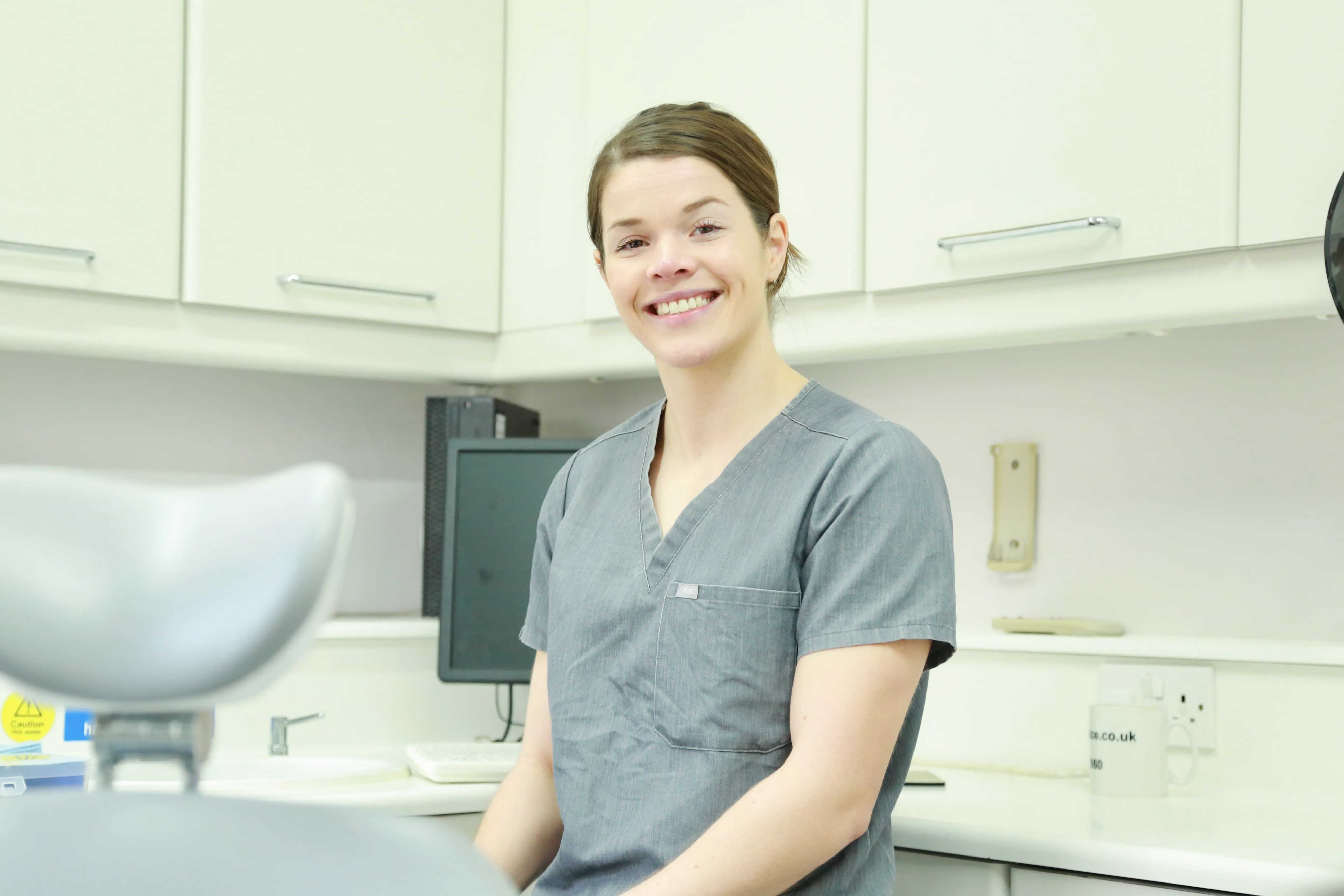
It depends on the size of the graft. Smaller, simultaneous grafts usually heal alongside your implant with minimal extra discomfort. Larger, staged grafts may involve more swelling and a longer healing period. In all cases, you'll go home with clear written aftercare instructions, gentle pain relief advice, and a direct number to call if anything worries you.

How much does bone grafting cost in Richmond?
We're a fully private practice with transparent, upfront pricing:
- Implant consultation - £95
- 3D CBCT diagnostic scan - £125
- Guided bone regeneration (GBR) - from £400
- Ridge preservation - from £495
- Sinus augmentation - from £600
- Bone graft - from £1,200
Your written treatment plan will set out the full cost before you commit to anything.
Frequently asked questions
Do I always need bone grafting if I want dental implants?
No - many patients have plenty of bone and don't need grafting at all. We'd never recommend a procedure that isn't clinically needed. The only way to know for sure is a proper consultation and 3D CBCT scan.
Do I always need bone grafting if I want dental implants?
No - many patients have plenty of bone and don't need grafting at all. We'd never recommend a procedure that isn't clinically needed. The only way to know for sure is a proper consultation and 3D CBCT scan.
Is bone grafting uncomfortable?
The procedure itself is carried out under local anaesthetic, so you won't feel pain at the time. Most patients describe mild tenderness or swelling for a few days afterwards, similar to (or sometimes less than) having a tooth taken out. IV sedation is available if you'd prefer to feel more relaxed throughout.
How long does the bone need to heal before an implant can go in?
For minor grafting done at the same time as your implant, no extra waiting is needed. For staged grafting (where bone is rebuilt first), healing typically takes three to nine months depending on the size of the area.
What is bone graft material made from?
Several different materials can be used, including synthetic options, processed donor bone, or bovine-derived material - all carefully regulated and safe. We'll always explain exactly what we'd recommend for your case and answer any questions, including if you have religious or dietary preferences we should consider.
Will bone grafting be successful for me?
In experienced hands, with careful planning and proper healing time, bone grafting is genuinely predictable. Success rates are very high. The main factors that affect outcome are smoking, oral hygiene, and overall medical health - all of which we'll discuss honestly at your consultation.
What happens if a bone graft doesn't take properly?
It's uncommon, but it does occasionally happen - usually due to infection or healing problems. If it does, we'll talk you through your options. In most cases, we can allow the area to heal and try again once the conditions are right.
Can bone grafting be done at the same time as a tooth extraction?
Yes - and it's often the smartest approach. Placing bone material into the empty socket at the time of extraction (sometimes called atraumatic extraction for implant) preserves bone for a future implant and avoids more involved grafting later.