How dental implant treatment actually works

Dental implant treatment can feel like a big unknown until someone walks you through it properly. Here's exactly what's involved, step by step, with nothing skipped or glossed over.
What's involved in dental implant treatment?
Dental implant treatment replaces a missing tooth root with a small titanium post, which then supports a crown, bridge or denture above it. The treatment unfolds across several stages: consultation and planning, implant placement, a healing period, and finally fitting your new tooth (or teeth). The whole process usually takes three to six months from start to finish, depending on your case.

Why we never rush dental implant treatment
There's a temptation in modern dentistry to promise faster and faster results. We've taken a different view. Implants rely on biology, not just mechanics - your jawbone needs proper time to bond with the implant before any pressure is placed on it. Rushing that process is one of the most common reasons implants fail long-term. We'd far rather give you a slightly longer timeline and a result that lasts decades, than cut corners for the sake of a quick win.
Modern dentistry in Richmond powered by 3D planning
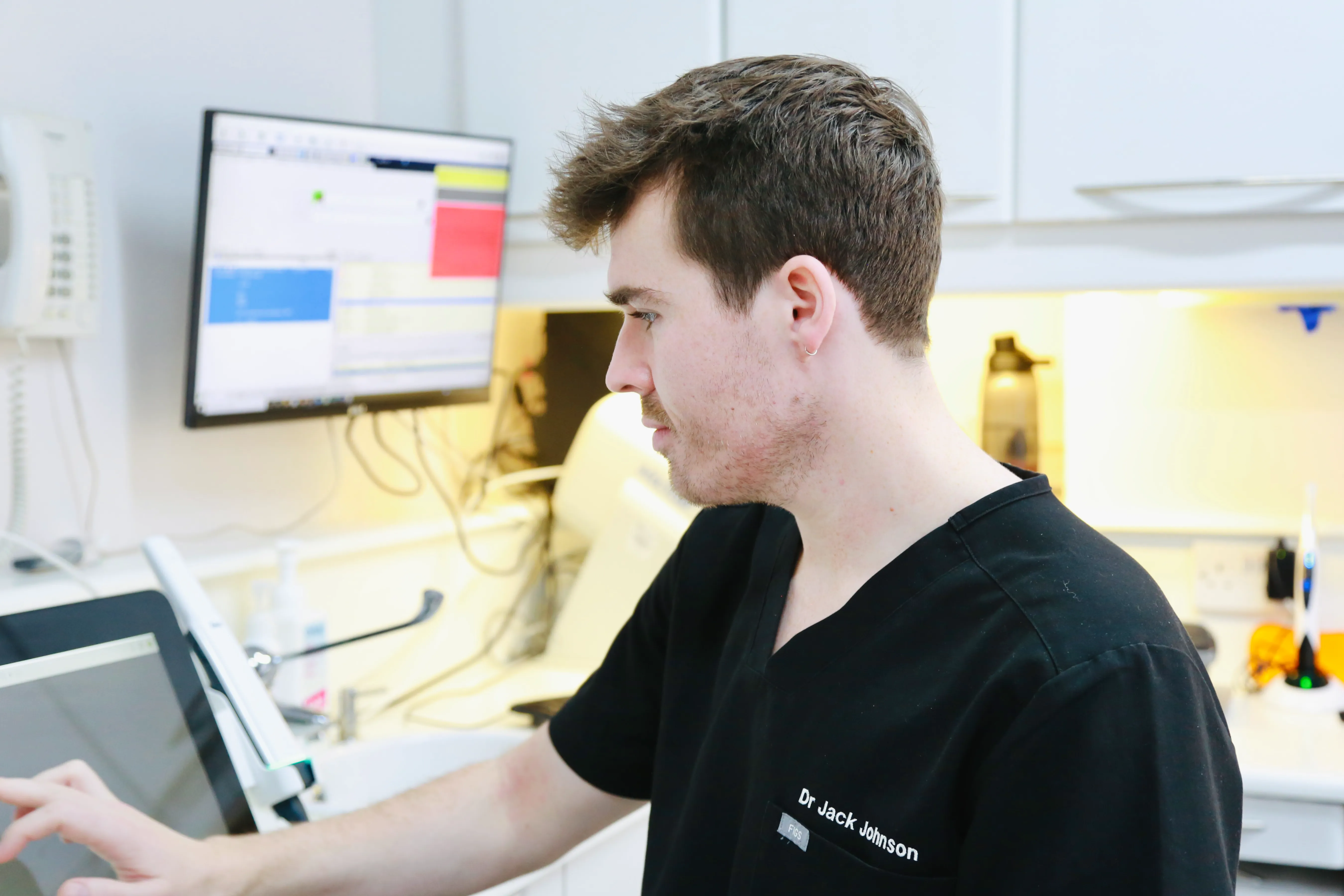
Every implant case at Richmond Hill Dental begins with detailed digital planning. Our in-house 3D CBCT scanner shows your jawbone, nerves, sinuses and surrounding anatomy in remarkable three-dimensional detail. Combined with digital iTero impressions, this lets our team plan the exact position, angle and depth of each implant virtually - long before any surgery begins. Where helpful, we also use surgical guides to ensure precise placement on the day.
Your dental implant journey at Richmond Hill Dental
Implant treatment is a properly considered process. Here's exactly what to expect at each stage.
Step 1 - Your initial consultation
You'll meet our implant team for a dedicated consultation (£95). We'll examine the area, take any necessary digital scans or X-rays, discuss your goals, and explain clearly whether implants are the right path for you.
Step 2 - 3D CBCT scan and digital planning
A detailed 3D scan shows us exactly what your jawbone looks like. We'll plan the precise position of every implant virtually, and you'll receive a fully costed written treatment plan to take home and consider. There's never any pressure to commit.
Step 3 - Implant placement
On surgery day, the implant is gently placed into your jawbone under local anaesthetic. The procedure itself usually takes 30 to 90 minutes per implant and is quicker (and calmer) than most patients expect. IV sedation is available if you'd prefer to feel deeply relaxed throughout.
Step 4 - Healing and integration
Over the following 6 to 16 weeks, your implant bonds firmly with your jawbone through a remarkable natural process called osseointegration. During this stage, you'll often have a temporary tooth in place, and we'll review you regularly to check everything's healing well.
Step 5 - Your final crown, bridge or denture
Once the implant is fully integrated, your final restoration is digitally designed and carefully matched to your natural teeth. We'll fit it precisely, check every detail of bite and appearance, and make sure you're properly happy before you leave.
Step 6 - Long-term aftercare
With good home care and regular hygiene visits, your implant can last for decades. We'll see you for ongoing check-ups to keep everything in excellent health, and you'll always have a direct line to our team if anything worries you.
Is the implant procedure uncomfortable?
The honest answer is that it's almost always far easier than patients fear. The area is fully numbed throughout, so you won't feel sharpness or pain at the time. Mild tenderness or swelling in the days afterwards is normal and usually settles within a few days with standard pain relief. Many patients tell us it was easier than a complex extraction.

How long does each stage take?
A quick breakdown of typical timings:
- Initial consultation - around 45 minutes
- 3D CBCT scan - around 15 minutes
- Implant placement - 30 to 90 minutes per implant
- Healing and integration - 6 to 16 weeks
- Final restoration fitting - one to two appointments
Total treatment time from consultation to final tooth is typically three to six months. More complex cases involving bone grafting or sinus lifts may take slightly longer.

Sedation for nervous patients in Twickenham and Richmond
If you're anxious about the procedure, please know you're far from alone - and we have proper experience helping. IV sedation with Dr Frances Carling-Thom can help you feel deeply relaxed throughout, with most patients remembering very little of the appointment afterwards. Frances specialises in caring for nervous patients and has over 15 years of experience.

After your dental implant procedure
You'll leave your appointment with:
- Clear written aftercare instructions
- Pain relief guidance and any medication needed
- A direct contact number for the implant team
- Scheduled review appointments
- Honest advice on what to expect over the coming days
Most patients return to normal activities within a day or two, and any tenderness usually settles within a week. For a fuller overview of what to expect, see our dental implant recovery page.

Why patients in Richmond trust us for implants
A few of the reasons patients choose Richmond Hill Dental for their implant treatment:
- Detailed digital planning using in-house 3D CBCT scanning
- Established Dentsply Sirona implant systems
- Complex cases handled in-house, not referred elsewhere
- Honest, no-pressure assessment of your suitability
- Calm, family-feeling practice with three decades of community trust
- A team that genuinely cares about how you feel along the way

How much does the dental implant procedure cost in Richmond?
We're a fully private practice with transparent, upfront pricing:
- Implant consultation - £95
- 3D CBCT diagnostic scan - £125
- Dental implant - from £1,500
- Abutment and crown - from £1,500
- IV sedation - from £500
A single implant with crown typically starts from around £3,000. Final pricing depends on your specific case, and you'll always receive a written treatment plan before agreeing to anything. See our full implant costs page for the complete breakdown.
Frequently asked questions
How long does it take to recover from implant surgery?
Initial healing takes a few days, with most patients back to normal activities within a week. Full bone integration takes 6 to 16 weeks, although you won't feel anything different during this stage.
Can I return to work after the procedure?
Most patients return to work within one or two days. If your job is physical or you've had sedation, three to five days is more realistic. We'll give you tailored advice based on your specific case.
Will I be without teeth during treatment?
Usually not. For most patients, we can provide a temporary tooth (or temporary bridge for larger cases) during the healing phase, so you're never left with a visible gap. For full-arch cases, All-on-X same day teeth can fit a fixed temporary bridge on the same day as surgery.
How successful are dental implants?
Long-term success rates sit comfortably above 95% when implants are carefully planned, properly placed and well maintained. Many of our long-term patients still have implants placed 20+ years ago doing their job beautifully.
What if I'm anxious about the procedure?
You're far from alone, and we have proper experience helping. As well as local anaesthetic, we offer IV sedation for patients who'd rather feel deeply relaxed throughout. Most sedated patients remember very little of the appointment afterwards.
How much does the dental implant procedure cost?
A single implant with crown typically starts from around £3,000. Final cost depends on the number of implants needed, whether bone grafting is required, and whether sedation is used. You'll always receive a fully written treatment plan before committing.
What if my implant doesn't heal properly?
Implant failure is uncommon when treatment is carefully planned, but if it does happen we'll talk you through your options openly. In most cases, the area can be allowed to heal and a new implant placed once the site is suitable again.
Are dental implants safe?
Yes - dental implants are one of the most well-researched treatments in modern dentistry. See our are dental implants safe page for a fuller honest look at safety, including the differences that genuinely matter between providers.