Solutions for loose, uncomfortable dentures

If your dentures slip, click or rub, you're not stuck with the problem. There are several genuinely effective ways to get back to eating, speaking and smiling without a second thought.


Why dentures become loose over time
Loose dentures are one of the most common problems patients come to us about - and it usually isn't because the denture was made badly. It's the jawbone underneath that gradually changes. Once teeth are lost, the bone beneath your gums slowly shrinks year after year, and even a perfectly fitted denture eventually loses its grip on a smaller, differently shaped ridge.

The everyday impact of loose dentures
What starts as a small annoyance often becomes something bigger. Patients tell us:
- They've stopped eating certain foods (apples, crusty bread, anything chewy)
- They worry about laughing too widely or yawning in public
- They've become quieter in social situations
- Their dentures click or slip mid-conversation
- Sore spots and gum irritation are constant
- Their confidence at meals and events has quietly faded
If any of this sounds familiar, please know you're far from alone - and there are real, proven ways to fix it.
Your three main solutions at Richmond Hill Dental
Modern dentistry offers three sensible ways to deal with loose dentures, ranging from short-term fixes to genuinely long-term answers. We'll always recommend the one that genuinely suits your case.
Denture reline or adjustment
A reline involves resurfacing the inside of your denture so it fits more closely to your current gum shape, while an adjustment may tweak the bite or edges..
- A good short-term option if your denture is otherwise in good condition
- Quick, affordable and non-surgical
- Won't last forever, since the underlying bone will keep changing
- Usually works best every one to three years

Denture adhesives
A familiar fix - paste or strips that temporarily improve denture stability.
- Easy and inexpensive
- Useful for special occasions or short-term relief
- Doesn't fix the underlying problem
- Can be messy and unreliable for everyday use

Implant-supported dentures
The most reliable long-term answer. A small number of dental implants are placed into your jawbone, and your denture clips firmly onto them - either as a fixed restoration or a removable "snap-in" denture.
- Genuinely solves the underlying problem of bone loss
- No more slipping, clicking or adhesives
- Eat almost anything you could with natural teeth
- Helps preserve your remaining jawbone
- Often life-changing for long-term denture wearers
For more detail, see our implant-supported dentures page, or our All-on-X same day teeth page if you'd prefer a fully fixed solution.
Why implants address the underlying problem
Relines and adhesives can certainly help in the short term, but they don't tackle why your dentures became loose in the first place - the steady shrinkage of bone beneath them. Implants do something genuinely different. By anchoring directly into your jawbone, they actually help preserve the bone around them and give your denture something solid to hold onto. That's why patients who switch tend to say they wish they'd done it sooner.
Caring for Richmond families for over 30 years
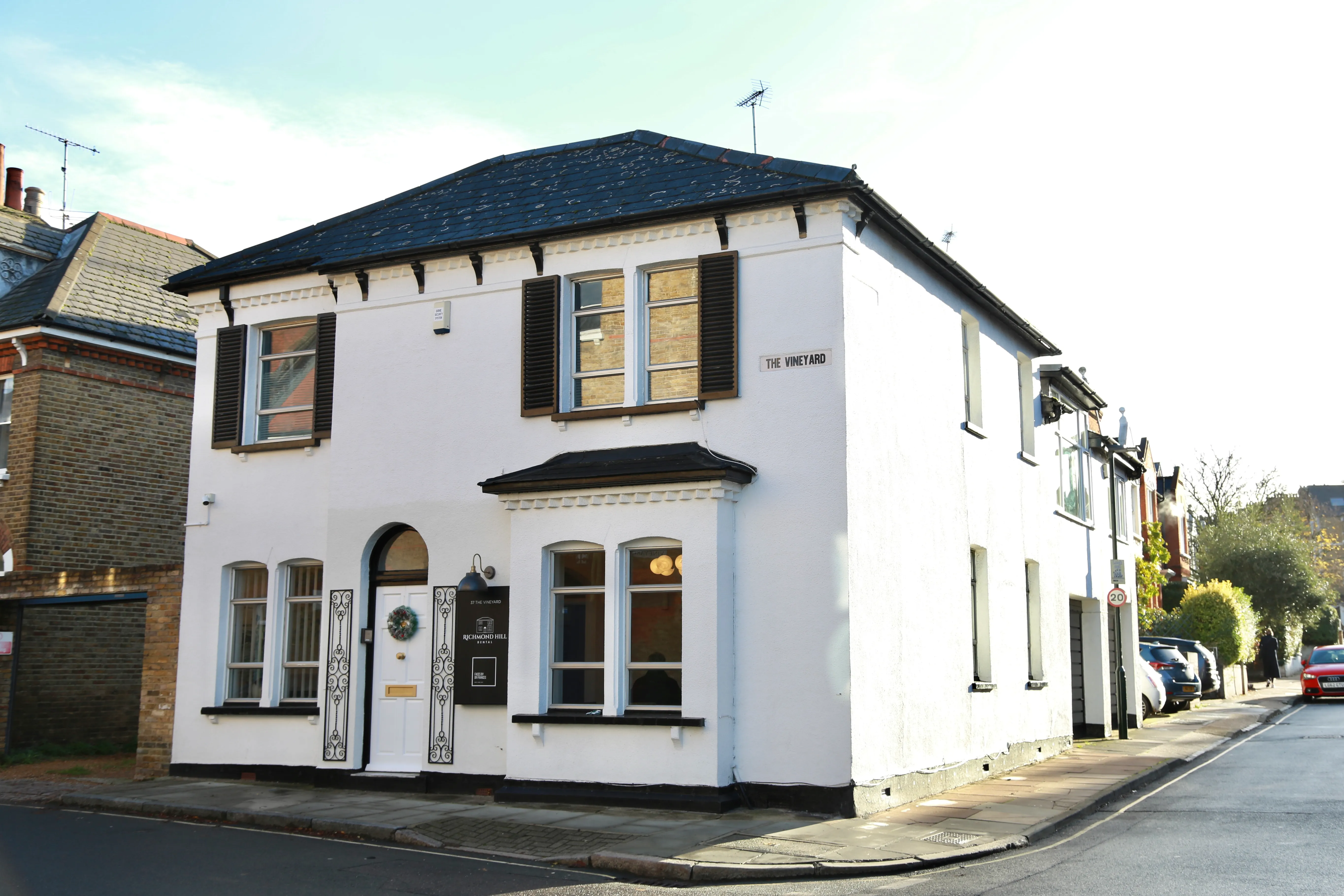
We've been helping patients with loose dentures at our Vineyard practice for many years. Many of our happiest implant patients started exactly here - frustrated, embarrassed, or simply tired of putting up with something that wasn't working. The transformation is often remarkable, and patients regularly tell us it's the best decision they've made for their everyday quality of life.
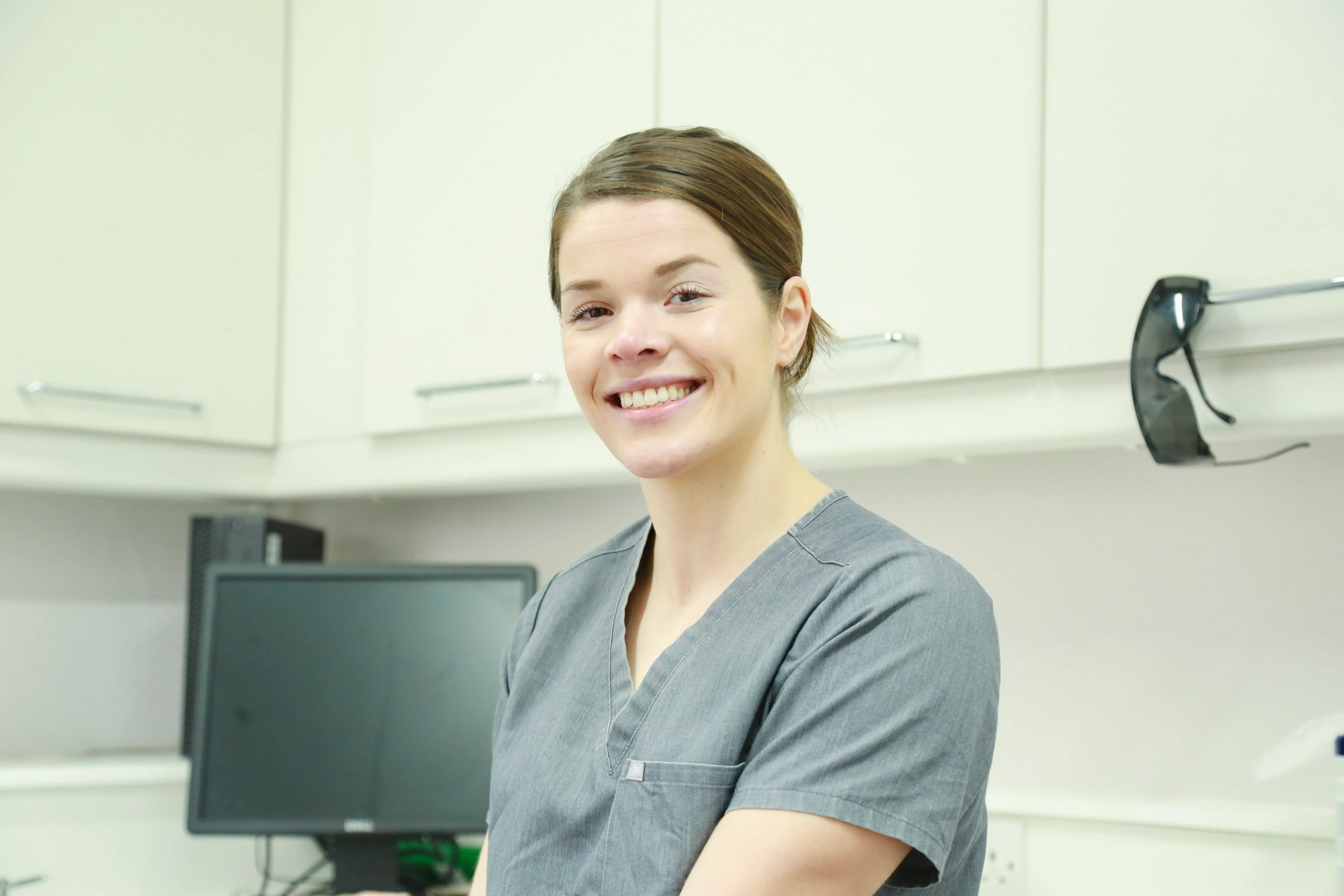
Modern dentistry in Richmond powered by 3D scanning
Every implant case begins with our in-house 3D CBCT scanner, which shows your jawbone in remarkable detail. This means we can plan exactly where each implant should go - even if there's been significant bone loss over the years. We also use Dentsply Sirona implant systems, one of the most established in the world.
Your treatment journey at Richmond Hill Dental
If you choose the implant route, here's exactly what to expect.
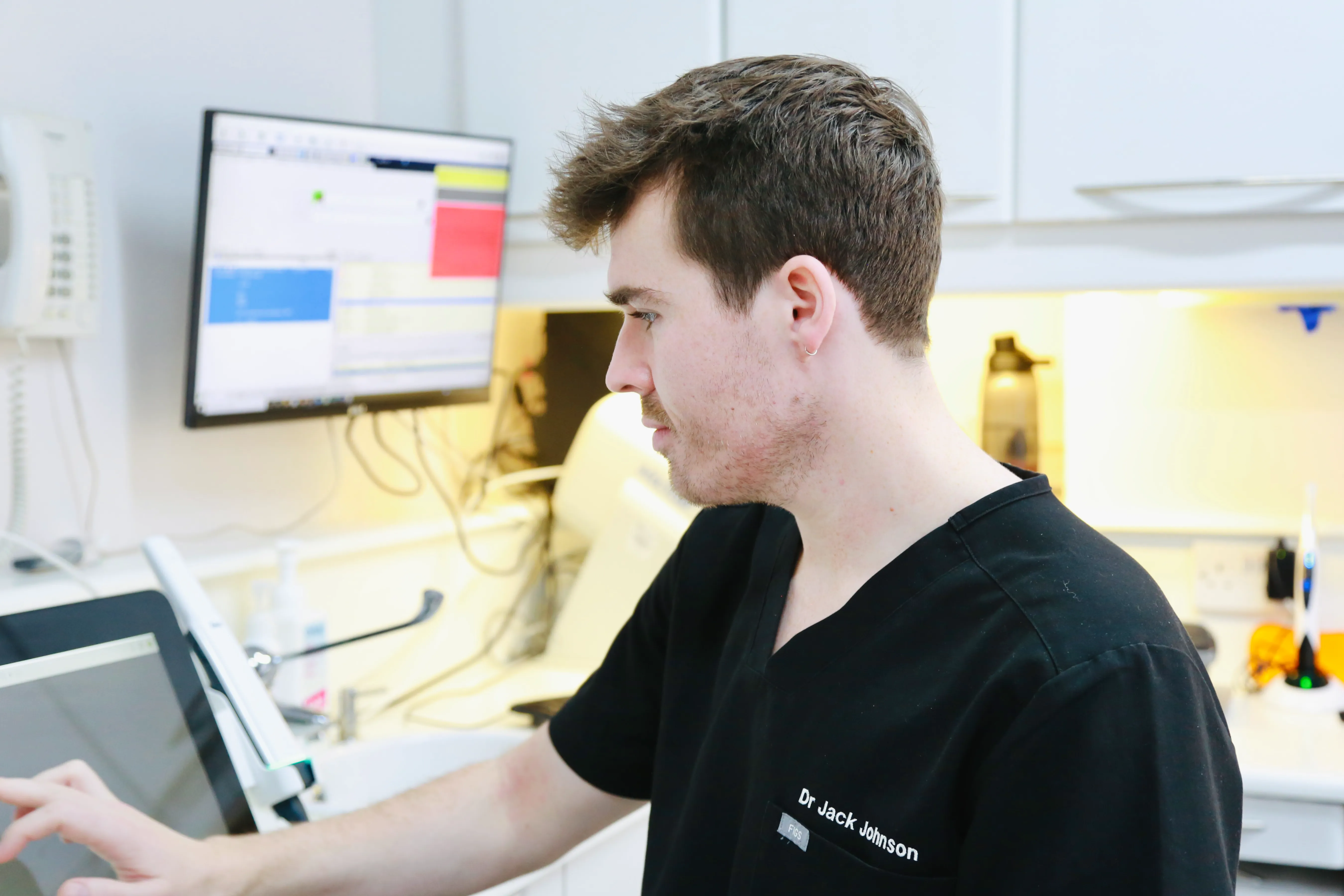
Step 1 - Your implant consultation
You'll meet our implant team for a dedicated consultation (£95). We'll examine your current dentures, assess your bone, and explain whether implant stabilisation is right for you.
Step 2 - 3D CBCT scan and treatment planning
A 3D scan shows us exactly what your jawbone looks like. We'll plan the implants precisely and create a fully costed written treatment plan to take home and consider.
Step 3 - Implant placement
The implants are gently placed under local anaesthetic, with IV sedation available if you'd prefer. Most patients return to normal activities the next day.
Step 4 - Healing and integration
Over the following 8 to 12 weeks, your implants bond firmly with your jawbone. You can usually continue wearing your existing denture during this time, with adjustments where needed.
Step 5 - Connecting your denture
Once your implants are integrated, your denture is connected to them - either fixed permanently or fitted with clip attachments so you can remove it for cleaning.
Step 6 - Enjoying real stability
You'll go home with clear care instructions and a denture that genuinely stays where it should. The difference, most patients tell us, is immediate.

Which option is right for you?
The right approach depends on:
- The condition of your existing dentures
- How much jawbone you have left
- Whether you've considered implants before
- Your budget and long-term goals
- How long you've been dealing with the problem
Many of our patients start with a reline or two before deciding implants are the genuine answer. There's no wrong order - we'll guide you through honestly.

Sedation for nervous patients in Twickenham and Richmond
If you're feeling anxious about implant treatment, please know it's perfectly understandable - especially after years of denture discomfort. IV sedation with Dr Frances Carling-Thom can help you feel deeply relaxed throughout, with most patients remembering very little of the appointment.

How much do loose denture solutions cost in Richmond?
We're a fully private practice with transparent, upfront pricing across every option:
- Denture reline or adjustment - typically the lowest-cost option, quoted at consultation
- Implant consultation - £95
- 3D CBCT diagnostic scan - £125
- Stabilise loose denture with implants - from £3,000
- Dental implant - from £1,500
- All on 4 / Same day teeth (full arch fixed) - from £9,000 per arch
- IV sedation - from £500
Frequently asked questions
Can loose dentures be fixed without implants?
Yes, to a point. A reline or adjustment can improve the fit of an existing denture, and adhesives can help in the short term. Neither addresses the underlying bone loss, though, so they tend to be temporary improvements rather than long-term answers.
Are implant-supported dentures uncomfortable to get?
The procedure is carried out under local anaesthetic, so you won't feel sharpness or pain at the time. Most patients tell us it was far easier than they expected - often gentler than a complex extraction. IV sedation is available if you'd prefer to feel deeply relaxed throughout.
How quickly can my loose dentures be improved?
A reline can usually be completed within a couple of appointments over one to two weeks. Implant-supported dentures take longer (three to six months from start to finish), but the result is far more lasting.
Do I need a new denture, or can my existing one be used?
If your current denture is in good condition, it can often be adapted to clip onto your new implants - which keeps the overall cost lower. If it's worn or no longer fits well, we'll talk you through your options for a beautifully made new one.
Will I be without my dentures during treatment?
In most cases, no. You can usually continue wearing your existing dentures during the healing phase, with small adjustments where needed. We'll plan this carefully with you at your consultation.
How long do implant-supported dentures last?
The implants themselves can last for decades with proper care. The denture attached on top usually needs replacing or refurbishing every 7 to 10 years. Regular hygiene visits are key to keeping the whole system healthy.
What if I've been told I don't have enough bone for implants?
That's surprisingly common with long-term denture wearers, since bone shrinks more the longer teeth have been missing. Our 3D CBCT scan will show exactly what's possible, and in many cases bone grafting or carefully angled implants make treatment possible after all.