How safe are dental implants really?

Dental implants are one of the most well-researched treatments in modern dentistry. Here's an honest look at how safe they are - and what makes the difference between a good outcome and a poor one.

How safe are dental implants in modern dentistry?
Dental implants have been used successfully for over 40 years and are now one of the most thoroughly researched treatments in dentistry. When carefully planned and placed using high-quality components, long-term success rates sit comfortably above 95%. Put another way - the vast majority of dental implants placed today will still be doing their job decades from now.
What "safe" actually means with implant treatment
When patients ask about safety, they're usually asking three things at once - is the procedure itself safe, will the implant last, and what are the risks if something goes wrong. The honest answer is that all three depend almost entirely on how the treatment is planned and who carries it out. The implant itself is only part of the picture.
What really matters for implant safety
Three things genuinely shape how safe and how successful your implant treatment will be:
- The quality of the implant system itself
- The skill and judgement of the clinician placing it
- Respecting the biology - giving healing time the space it needs
We'll walk through each of these below, because they're worth understanding before you commit to any treatment.

The implant system we use at Richmond Hill Dental
We use Dentsply Sirona implant systems for almost all our implant treatment. Here's why that matters for your safety:
- 30+ years of clinical data - one of the longest-established implant systems in the world
- Used by dentists globally - meaning if you ever move, finding someone who can maintain your implant is straightforward
- Long-term parts availability - components and replacement parts are reliably available many years down the line
- Continuous research and development - the system evolves with the latest evidence, not the latest marketing
Lower-cost implant brands may offer attractive headline pricing, but they often lack the long-term clinical evidence and ongoing support that established systems provide.

Why planning makes the biggest difference
Even the best implant system can fail if it isn't placed in the right spot. Every implant case at Richmond Hill Dental is planned in detail using our in-house 3D CBCT scanner, which shows your jawbone, nerves, sinuses and surrounding anatomy in remarkable three-dimensional detail. This lets our team plan the exact position, angle and depth of each implant virtually - long before any surgery begins.
Respecting the biology of healing
Dental implants aren't a purely mechanical procedure. They rely on a natural biological process called osseointegration, where your bone slowly bonds to the implant over weeks and months. Rushing this stage genuinely affects how well an implant succeeds long-term.
At Richmond Hill Dental:
- We allow proper healing time between stages
- We never compromise long-term outcomes for speed
- We'll always explain why a particular timeline matters
- If a patient wants treatment faster than is safe, we'll say so honestly
It's one of the quietest differences between careful and rushed implant dentistry - and one of the most important.
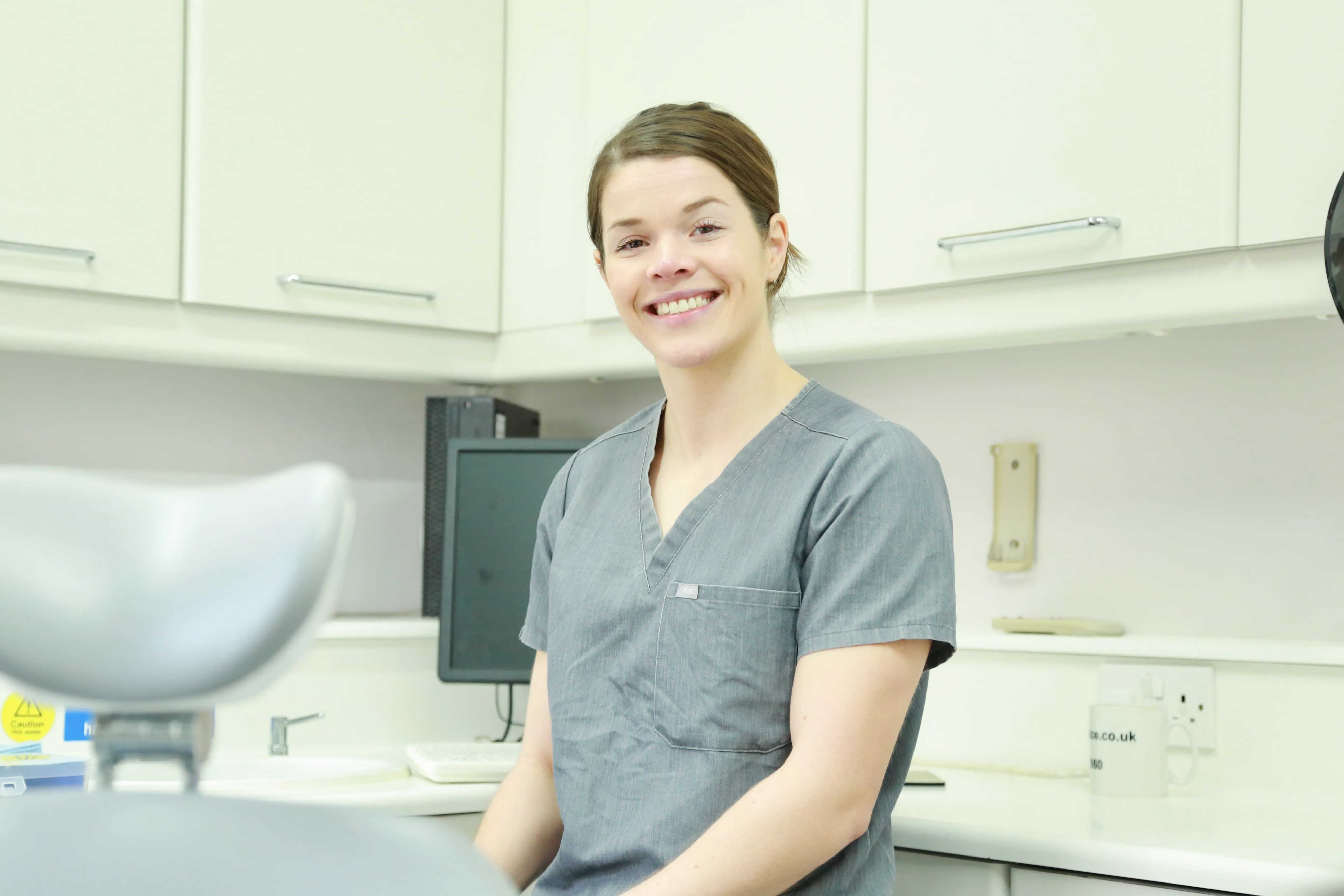
Complex dental treatments in Richmond handled in-house
Some implant cases are straightforward. Others involve bone grafting, sinus augmentation, full-arch reconstruction or treatment of patients with significant medical histories. Our team handles the full range of complexity in-house at Richmond Hill Dental, which means consistent, joined-up care from start to finish - rather than your treatment being split between different clinics.

The risks to understand before treatment
As with any clinical procedure, dental implants do carry a small number of potential risks. Honest implant dentistry means explaining them clearly, not skipping over them. The main ones are:
- Infection around the implant site (uncommon, usually treatable)
- Failure of osseointegration, where the implant doesn't bond properly with the bone
- Nerve irritation, particularly with lower jaw implants (rare with proper 3D planning)
- Sinus complications with upper jaw implants (rare with careful technique)
- Peri-implantitis, a form of gum disease around an implant, usually preventable with good hygiene visits
The good news is that all of these become significantly less likely with thorough planning, experienced clinical judgement and proper aftercare.

Who might not be suitable for dental implants?
Most adults can have implants safely, but certain factors do affect suitability. We'll always assess these honestly at your consultation:
- Smoking, which reduces healing and long-term success rates
- Poorly controlled diabetes
- Significant bone loss (often manageable with bone grafting)
- Some bisphosphonate medications (used for osteoporosis)
- Active gum disease, which needs treating first
- A history of head and neck radiotherapy
If any of these apply to you, it doesn't necessarily mean implants are off the table - it just means we'll plan more carefully.

What recovery looks like after dental implant placement
Most patients are pleasantly surprised at how mild recovery is. Typical recovery looks like:
- Mild swelling and tenderness for two to four days
- Soft foods for the first week or so
- Return to normal activities usually within a few days
- Full osseointegration over three to six months
You'll leave with clear written aftercare instructions and a direct number to call if anything worries you. For more on what to expect, see our dental implant page.

Sedation for nervous implant patients in Richmond
If you're anxious about the procedure, please know you're far from alone. IV sedation with Dr Frances Carling-Thom can help you feel deeply relaxed throughout, and most patients remember very little of the appointment afterwards. Frances specialises in caring for nervous patients and has over 15 years of experience.

Why patients in Richmond trust us for implants
A few of the reasons patients choose Richmond Hill Dental for their implant treatment:
- Detailed digital planning using in-house 3D CBCT scanning
- Established Dentsply Sirona implant systems
- Focus on long-term success rather than speed
- Honest assessment of suitability - including saying no when needed
- Complex cases handled in-house, not referred elsewhere
- Calm, family-feeling practice with three decades of community trust
Frequently asked questions

Are dental implants safe long-term?
Yes - genuinely. When high-quality implant systems are used, treatment is carefully planned, and you maintain good oral hygiene with regular hygiene visits, dental implants have one of the best long-term track records in modern dentistry. Many of our long-term patients still have implants placed 20+ years ago.
Can dental implants be done quickly?
Some stages can be accelerated in specific cases - for example, All-on-4 same day teeth allows a fixed temporary bridge to be fitted the same day as implant surgery. However, the underlying biological healing still needs time. We'll always be honest about which parts of treatment can be sped up safely and which can't.
Are all implant providers the same?
Honestly, no. Differences in implant system quality, planning depth, clinical experience and aftercare can significantly affect outcomes - even though the procedure may look similar on the surface. If you're comparing providers, ask about the implant brand they use, their planning process, and their long-term success rates.
What happens if a dental implant fails?
Implant failure is uncommon when treatment is planned and placed carefully, but it can occasionally happen. If it does, we'll talk you through your options openly. In most cases, the area can be allowed to heal and a new implant placed once the site is suitable again.
Are dental implants safe if I have a medical condition?
Most patients with well-controlled medical conditions can still have implants safely. Diabetes, blood pressure issues, osteoporosis and other conditions can all be managed with careful planning. We'll review your full medical history at your consultation and discuss anything that needs particular attention.
Is it worth paying more for dental implants?
In our honest view, yes - up to a point. Cheap implants often involve lower-quality systems, less experienced clinicians and limited aftercare, all of which can lead to bigger costs and complications later. That doesn't mean the most expensive option is always best either. The aim is to find a provider whose pricing reflects genuine quality.
How will I know if my implant is healing properly?
We'll see you for review appointments throughout treatment to check healing is progressing as expected. Most issues, if they were to arise, would show up in the first few weeks - so close monitoring during this period catches anything early. Patients tell us this ongoing contact is one of the most reassuring parts of treatment.